Companies Have Options for Going Public, Including Direct Listing, IPO, and SPAC
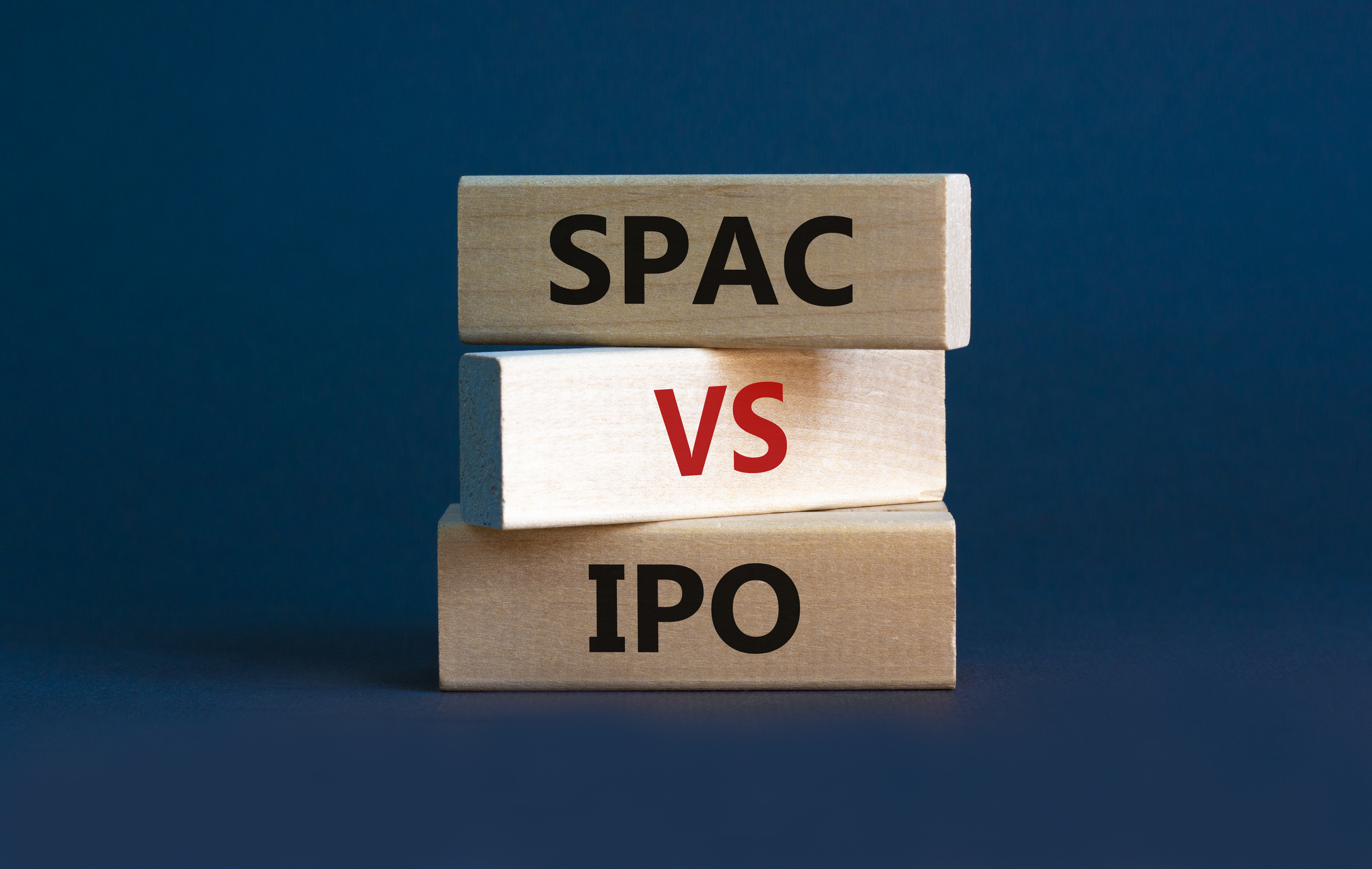
There are three main ways for startups to make a public debut: a Direct Listing, Initial Public Offering (IPO), or a Special Purpose Acquisition Company (SPAC) IPO. While traditional IPOs might be the most common and recognizable choice, Direct Listings and SPACs are two alternative paths, each providing distinct benefits and limitations in comparison to IPOs. In this blog, MicroVentures breaks down direct listing vs IPO vs SPAC methods of going public, the benefits and limitations of a startup pursuing each route, and some implications and key considerations for investors.
Direct Listing vs IPO vs SPAC: A Breakdown
What Is a Direct Listing?
In a direct listing, a company goes public by allowing existing shareholders to sell their shares directly to the public on an exchange such as NASDAQ or the New York Stock Exchange (NYSE). Going public through a direct listing does not involve issuing new equity shares or raising primary capital for the company itself and does not involve employing underwriters or conducting a roadshow like an IPO. It serves as a liquidity event for early investors and employees rather than serving as a capital-raising event for the company.
Unlike an IPO, there isn’t a predetermined number of available shares or a set price per share. Instead, the number of shares depends on the number of shareholders who choose to list their shares, and pricing depends on market demand and market conditions.
State of Direct Listings
Direct listings remain the least common method to go public. They may be best suited for companies that already have strong brand recognition, a broad existing shareholder base, and no immediate need to raise capital. Direct listings can offer potentially lower transactions costs due to the lack of need for an underwriter but can place the burden of generating market interest and managing initial trading volume on the company itself.
Initial Public Offering (IPO)
A company goes public through an IPO by issuing new equity shares in order to raise capital. It involves engaging one or more investment banks as underwriters, who assist in determining the offering price, marketing the shares to institutional investors via a roadshow, and managing the initial trading volume. Conducting an IPO remains a well-established process for a private company to go public. IPOs tend to be the most common method, due to the benefits of raising additional capital in addition to working alongside well-known investment banks that have helped many companies go through the IPO process. This process can help startups achieve a controlled introduction to the public market while receiving support from investment banks in order to build initial demand and set pricing.
State of IPOs
In 2025, the global IPO market demonstrated signs of stabilization after prior years of decreased markets due to macroeconomic uncertainty. According to EY Global IPO trends 2025, there were 1,293 IPOs globally, raising $171.8 billion as of October 8, 2025.[1] This represented a 39% increase in total proceeds compared to the same period in 2024. During the year, the market was characterized by heightened investor selectivity and a clear trend toward technology and AI-focused firms.
Special Purpose Acquisition Companies (SPACs)
A SPAC, also known as a blank check company, is a shell entity using an IPO for the purpose of merging with or acquiring a private company. In a SPAC, the intent lies within acquiring or merging with a private company within a set timeframe, typically within two years, in a process known as a de-SPAC. Taking the acquired private company public through the acquisition with the already public SPAC allows the startup to make its public debut without undergoing the traditional IPO process itself.
State of SPACs
The SPAC market experienced an increase in 2025 after slowing down in 2023 and 2024. ARC Group reports that nearly 100 SPAC IPOs were conducted in the first three quarters of 2025, raising ~$20.8 billion.[2] This rebound was driven by more experienced sponsors, enhanced governance structures, and clearer regulatory guidelines from the SEC. The increase in SPACs appears to be reflecting a more institutional and disciplined approach compared to the speculative boom of 2020 and 2021.
Strategic Considerations: Choosing Between Direct Listing vs IPO vs SPAC
So, what would cause a startup to choose one of these methods over another? The decision depends on a company’s specific objectives, financial profile, and risk tolerance.
Capital Raising vs. Liquidity
A traditional IPO is primarily designed to allow a company to raise new capital. A SPAC merger also raises capital for the eventual public company, providing funds from the SPAC’s IPO to the acquired company. Conversely, a direct listing primarily serves as a liquidity event for existing shareholders, not typically injecting new capital into the company.
Process and Cost
A traditional IPO is typically the most lengthy and expensive process, involving underwriting fees, which can be 5-8% of capital raised, roadshow expenses, and substantial management time. A SPAC merger may offer a faster, more certain timeline alongside a negotiated fee structure, although overall transaction costs can still be high when accounting for sponsor promotes and dilution. A direct listing generally has the lowest transaction costs due to the elimination of underwriters but lacks the marketing support and demand stabilization that an underwriter can provide.
Valuation and Pricing
For an IPO, the offering price is typically set by the underwriters after demand for the public offering has been assessed during the roadshow. This price can also be sensitive to last-minute market conditions. Alternatively, a SPAC provides a negotiated merger valuation that is agreed upon between the target company and the SPAC, offering more certainty. In a direct listing, the opening price is determined by supply and demand on the first day of trading, which can lead to higher initial volatility.
Final Thoughts
When startups are choosing which path to the public market they want to take, there are multiple considerations when choosing between a Direct Listing vs IPO vs SPAC. A traditional IPO remains a cornerstone method for reaching the public markets, while Direct Listings and SPACs have served as alternative methods. Considering factors such as cost, pricing needs, desired support from underwriters, and if the startup wants to raise capital can all shape which direction a startup chooses to take when pursuing a public offering.
Are you ready to invest in startups? Sign up for a MicroVentures account to start investing!
Want to learn more about investing in startups? Check out the following MicroVentures blogs to learn more:
- Developing Your Investment Thesis
- Learning From Failed Startups
- Investing in Second-Time Founders
- Is There an AI Bubble?
Sources
- [1]ey.com — https://www.ey.com/en_us/insights/ipo/trends
- [2]arc-group.com — https://arc-group.com/resurgence-spacs-2025/
Important disclosure
The information presented here is for general informational purposes only and is not intended to be, nor should it be construed or used as, comprehensive offering documentation for any security, investment, tax or legal advice, a recommendation, or an offer to sell, or a solicitation of an offer to buy, an interest, directly or indirectly, in any company. Investing in both early-stage and later-stage companies carries a high degree of risk. A loss of an investor’s entire investment is possible, and no profit may be realized. Investors should be aware that these types of investments are illiquid and should anticipate holding until an exit occurs.