
For decades, a handful of cities have dominated the conversation around where startups are built, funded, and scaled. That picture has been shifting, with venture activity spreading into a wider mix of domestic and international hubs that may not have been on most investors’ radars a decade ago. In this blog, learn more about how the geography of startups is evolving, what may be driving the change, and what investors may want to consider as innovation continues to spread.
The Traditional Startup Map
Historically, a small group of cities have accounted for a large share of venture capital activity in the United States. Silicon Valley, New York, and Boston have generally been viewed as the core of the domestic startup ecosystem, with each region developing its own areas of strength: technology and consumer software in the Bay Area, fintech and media in New York, and biotech and enterprise software in Boston.
Why Was it So Concentrated?
Geography typically mattered for a few reasons. Founders generally wanted to be close to pools of capital, experienced talent, customers, and the dense professional networks that can help a young company grow. In many cases, being physically present in one of these hubs was viewed as a meaningful advantage when raising a round or recruiting early employees.
That concentration is not disappearing, but it is no longer the whole story. Venture activity has been spreading into other parts of the country and into international markets, with some emerging hubs developing their own specialized ecosystems.
What Is Driving the Geographic Shift?
Several factors appear to be contributing to the spread of startup activity.
Remote and Distributed Work
The rise of remote and distributed work has reduced the need for founders and employees to live in the same city, which can make it easier to build a company outside of traditional hubs. In many cases, founders have relocated to lower-cost cities while still raising capital from investors based elsewhere.
Cost of Living
Another consideration that plays a role in the geographical shift is cost of living and operating expenses. Office space, salaries, and general overhead are typically lower in emerging hubs than in established ones, which may allow startups to extend their runway. For early-stage startups in particular, that runway extension can be meaningful when capital is harder to raise.
Local Incentives
State and local incentives, university research output, and the growth of regional capital pools have also contributed to the shift. Some cities have invested in attracting founders through tax incentives, grant programs, and accelerators. Universities can serve as a source of technical talent and research that may spin out into companies, and the gradual buildup of local venture funds and angel networks can help close the gap with established hubs.
Sector Specialization
Another factor contributing to the geographic shift is sector specialization. Certain regions have developed concentrations in specific industries, such as climate technology, defense technology, biotech, and advanced manufacturing. As capital flows toward those sectors, it can pull activity toward the cities where the relevant talent, infrastructure, and customers are clustered.
The New Geography of Startups
Concentration in the traditional hubs does remain significant. According to Carta’s 2025 ecosystem data, Bay Area startups accounted for roughly 41% of all U.S. capital raised, more than the next seven largest markets combined.[i] PitchBook’s Global VC Ecosystem Rankings point in a similar direction, placing San Francisco as the most developed startup ecosystem in the world by a wide margin, even as the same rankings show a number of newer hubs climbing on the strength of their recent growth.[ii] Even so, several other cities have continued to develop their own ecosystems and draw a growing share of activity.
Domestic Hubs
Across America, there are a few domestic areas that are emerging as startup hubs.
Austin, Texas
Austin has typically attracted founders in software, semiconductors, and consumer technology, and the local ecosystem reached a new milestone in 2025. According to Crunchbase, Austin startups raised approximately $7.19 billion in 2025, a roughly 65% increase from 2024 and an all-time high. Reporting on the data also pointed to defense and autonomous systems, energy technology, and advanced manufacturing as growing categories in the region.[iii]

Miami, Florida
In recent years, Miami has built a reputation for fintech, crypto, and Latin America-focused companies. An influx of investors and founders during the early 2020s contributed to that growth, although the durability of the shift has continued to be debated. According to PitchBook data reported by Refresh Miami, startups in the Miami-Fort Lauderdale metro area raised roughly $2.3 billion across 261 deals in the first three quarters of 2025, keeping the region among the more active U.S. markets by deal count.[iv]

Denver and Boulder, Colorado
Notably non-coastal, Denver and Boulder have generally been associated with aerospace, climate technology, and outdoor consumer brands. Local universities and federal research labs can serve as a source of technical talent in those sectors. The University of Colorado Boulder reports that more than 220 startups have spun out of its research and collectively raised over $14 billion, and nearby federal facilities such as the National Renewable Energy Laboratory can feed the region’s work in energy and climate technology.[v]

Salt Lake City, Utah
Salt Lake City and the broader “Silicon Slopes” corridor have typically been associated with software-as-a-service and other business software companies. Utah’s technology sector added more than 47,000 tech jobs over the past decade, supported by talent from the University of Utah and Brigham Young University, and companies such as Qualtrics, Domo, and Pluralsight have helped establish the region’s enterprise software reputation.[vi]

Raleigh, Durham, and Chapel Hill, North Carolina
The Research Triangle, which spans Raleigh, Durham, and Chapel Hill, has continued to grow in biotech, life sciences, and enterprise technology, supported by Duke University, the University of North Carolina, and North Carolina State University. In 2025, total venture funding in North Carolina reached $3.4 billion, a 108% increase from 2023, and the Research Triangle accounted for 73.2% of all deals in the state[vii]

International Hubs
The picture outside the United States has also been evolving. According to PitchBook’s World’s Top Startup Cities 2025, London ranked #5 globally and Tokyo moved up to #12.[viii] The following international cities have been emerging as new startup hubs over the past few years.
London, U.K.
London has long anchored Europe’s startup scene, with particular strength in fintech, and more recently, artificial intelligence. According to HSBC Innovation Banking and Dealroom, London-based startups attracted roughly $17.7 billion in venture capital in 2025, more than any other city in Europe,[ix] and the UK ranked #3 globally in Startup Genome’s 2025 report.[x]

Beijing, China
Beijing has developed into one of Asia’s largest deep technology hubs, with concentrations in artificial intelligence, semiconductors, and advanced manufacturing, anchored by universities such as Tsinghua and Peking. According to Startup Genome, government-guided funds have mobilized well over $14 billion in additional capital for early-stage fintech and technology startups. Much of the recent activity has been driven by state-backed investment rather than private venture capital.[xi]

Tel Aviv, Israel
Tel Aviv has long been associated with cybersecurity, defense technology, and enterprise software, with a track record of producing companies that scale internationally. Tel Aviv is home to 2,859 startups, making up 69% of all startups in Israel, and in 2025, the ecosystem recorded an annual growth rate of over 9.8%.[xii]

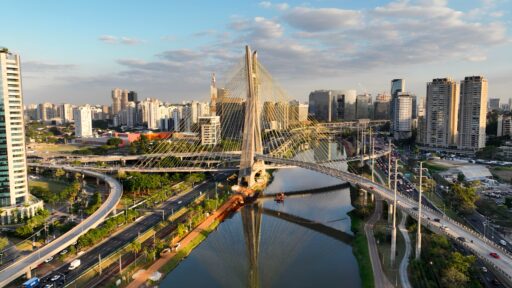
São Paulo, Brazil
In Latin America, São Paulo has anchored much of the region’s venture activity, particularly in fintech. As of March 2026, São Paulo’s startup ecosystem is worth over $26 billion in total venture capital funding and has over 4,800 active startups.[xiii]
Toronto, Canada
Toronto has continued to grow its presence in artificial intelligence, enterprise technology, and quantum computing. Toronto-based Xanadu Quantum Technologies was among the companies selected in late 2025 for a new federal program supporting Canadian quantum computing, part of a broader multiyear government commitment to the sector.[xiv]

Key Considerations
A more geographically distributed startup landscape can broaden the deal flow available to investors, but it may also introduce dynamics that are less familiar than those in established hubs. Investors may want to consider how local conditions, including the depth of regional capital, the maturity of legal and regulatory frameworks, and the strength of local exit markets, could affect an investment over time.
Due Diligence
An investor’s due diligence process considerations can shift somewhat when evaluating a company based outside of a familiar hub. Investors may want to look at the experience of the founding team in their specific market, the composition of the existing investor base, and how the company plans to access customers and follow-on capital. For international deals, currency exposure, cross-border tax treatment, and differences in corporate governance can also be relevant.
Exit Strategies
Regional exit environments can vary as well. The path to liquidity, whether through an initial public offering, acquisition, or other startup exits, may look different in markets where public listings are less common or where strategic acquirers are concentrated in particular industries. Investors may want to factor that into how they think about expected hold periods and potential outcomes.
Diversification
Platforms, syndicates, and secondary markets have generally made it easier for investors to access opportunities outside their immediate geography. That broader access can be useful for diversification, but it may also call for additional care in assessing companies whose local context is less familiar. Sector concentration in certain hubs can introduce its own form of risk, and investors should carefully consider how a portfolio is balanced across both geographies and industries.
Final Thoughts
The geography of startups has been spreading beyond a small number of traditional hubs, driven by remote work, cost differences, local incentives, and sector specialization. Emerging cities in the United States and abroad have continued to develop their own strengths, which can broaden the set of opportunities available to investors. As innovation spreads, investors may want to weigh the potential benefits of wider deal flow against the additional considerations that can come with less familiar markets.
Are you ready invest in startups from these emerging hubs? Sign up for a MicroVentures account to start investing!
Want to learn more about investing in startups? Check out the following MicroVentures blogs to learn more:
- Navigating Startup Exits
- Understanding Customer Acquisition Cost
- Evaluating a Startup’s Use of Funds
- Technical Due Diligence for Non-Technical Investors
Sources
- [i]carta.com — https://carta.com/data/top-startup-ecosystems-2025/
- [ii]pitchbook.com — https://pitchbook.com/news/articles/pitchbook-global-vc-ecosystem-rankings
- [iii]news.crunchbase.com — https://news.crunchbase.com/venture/all-time-high-funding-to-austin-startups-2025-ai-robotics-manufacturing/
- [iv]refreshmiami.com — https://refreshmiami.com/news/miami-startups-bagged-754m-of-vc-in-q3-pitchbook-reports-what-were-the-top-deals/
- [v]colorado.edu — https://www.colorado.edu/venturepartners/2025/08/11/internal-news/wanted-entrepreneurs-launch-startups-based-university-colorado-boulder-innovations
- [vi]builtin.com — https://builtin.com/articles/tech-companies-in-salt-lake-city
- [vii]cednc.org — https://cednc.org/2025-venture-report/
- [viii]pitchbook.com — https://pitchbook.com/news/articles/pitchbook-global-vc-ecosystem-rankings
- [ix]ffnews.com — https://ffnews.com/newsarticle/fintech/uk-vc-investment-rebounds-in-2025-marking-first-annual-growth-in-four-years/
- [x]startupgenome.com — https://startupgenome.com/report/the-global-startup-ecosystem-report-2026/introduction
- [xi]startupgenome.com — https://startupgenome.com/ecosystems/beijing
- [xii]startupblink.com — https://www.startupblink.com/startup-ecosystem/tel-aviv-yafo-il?page=1
- [xiii]predict.ventures — https://www.predict.ventures/blog/market-sao-paulo
- [xiv]utoronto.ca — https://www.utoronto.ca/news/startup-xanadu-among-four-quantum-computing-companies-receive-federal-support
Important disclosure
The information presented here is for general informational purposes only and is not intended to be, nor should it be construed or used as, comprehensive offering documentation for any security, investment, tax or legal advice, a recommendation, or an offer to sell, or a solicitation of an offer to buy, an interest, directly or indirectly, in any company. Investing in both early-stage and later-stage companies carries a high degree of risk. A loss of an investor’s entire investment is possible, and no profit may be realized. Investors should be aware that these types of investments are illiquid and should anticipate holding until an exit occurs.