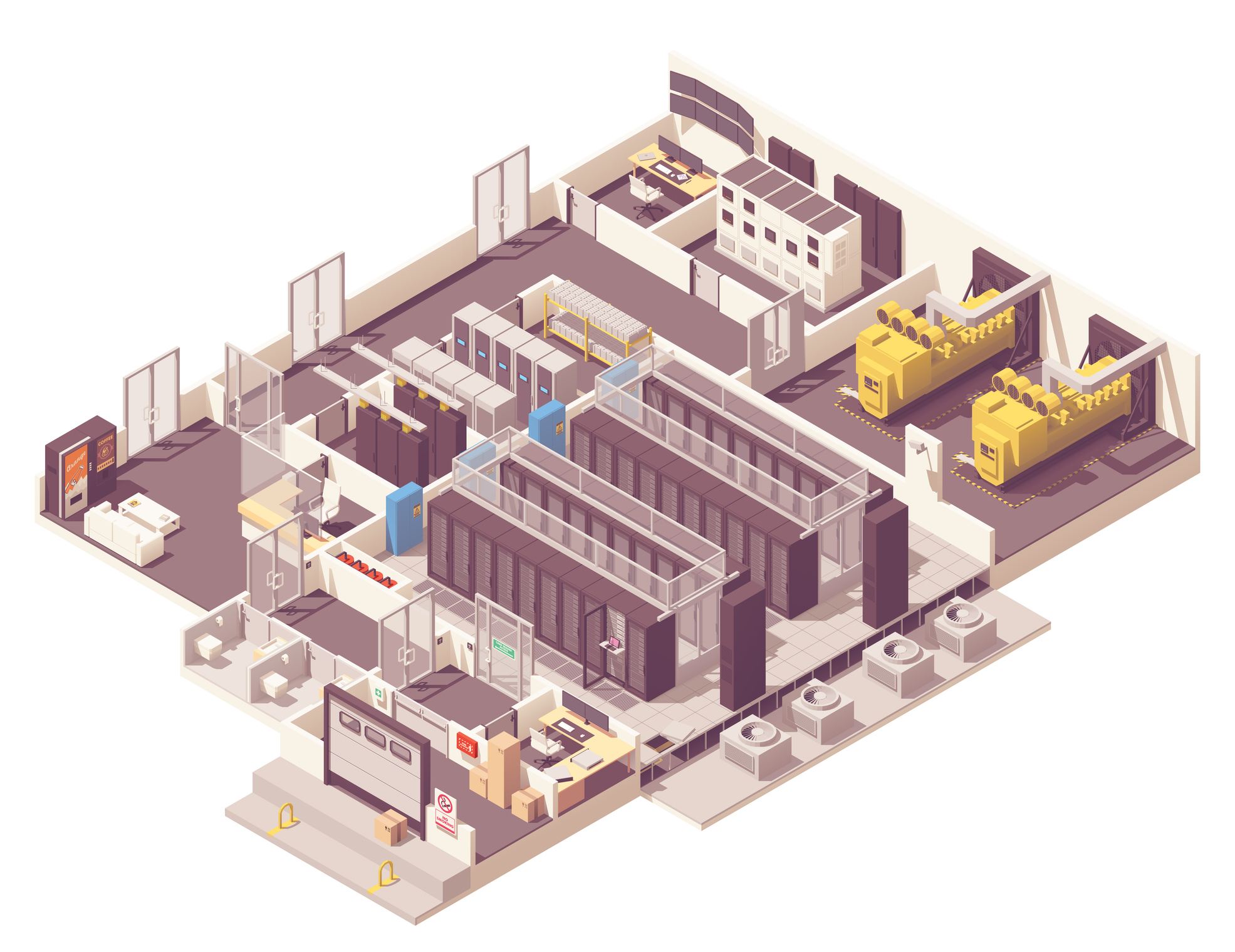
Artificial intelligence (AI) has captured most of the investment headlines over the past few years, with much of the focus on chips, models, and talent. But a quieter constraint is emerging that may matter just as much: electricity. As demand for data center capacity increases, power availability may be becoming one of the most important variables in AI Infrastructure. In this blog, learn more about what the energy bottleneck means for AI startups and the investors watching the space.
The Energy Bottleneck
The Power Crunch Behind AI’s Growth
Training and operating large AI models is extraordinarily energy-intensive. A single training run for a frontier model can consume the electricity equivalent of thousands of homes, and inference, the day-to-day cost of running these models, can add up to even more. As AI adoption broadens across consumer apps, enterprise software, and search, the cumulative electricity required to support it may continue to climb.
Data center electricity demand has historically been a relatively small slice of overall consumption, but that share is expected to grow quickly. The United States now has more than 4,500 active data centers, and more than 700 more are reported to be under construction.
According to the Department of Energy, those facilities consumed about 176 TWh of electricity in 2023, or roughly 4.4% of total U.S. electricity use,[i] and the Electrical Power Research Institute estimates that data centers could expand consumption to 9% of U.S. electricity generation annually by 2030.[ii] This projected growth is already materializing. After nearly two decades of essentially flat U.S. power demand, data centers drove roughly half of the country’s electricity demand growth in 2025.[iii]
Meanwhile, grids cannot add generation, transmission, and interconnection nearly as fast as hyperscalers want to build, with lead times to power a new facility in major markets exceeding three years.[iv] This capacity shortfall is pushing companies to delay projects, contract power directly from private producers, and install multiple, inefficient natural-gas reciprocating generators on-site. The trajectory suggests that power, rather than compute hardware alone, could become the binding constraint on how fast AI capabilities can scale.
Why Power Is Harder to Add Than It Looks
Building new electricity generation and transmission capacity is not a quick process. In many regions, projects can face multi-year interconnection queues, lengthy permitting timelines, and limits on what existing utilities can deliver. Even when capital is available, the physical and regulatory steps required to bring new power online tend to move slowly.
Geography compounds the issue. Existing data center hubs in places like Northern Virginia, parts of Texas, and certain areas of the Pacific Northwest have grown dense enough that local grids may be approaching their limits. Expanding into new regions can require building not just data centers, but the surrounding power infrastructure to support them, which generally takes years rather than months.
The result may be a more structural form of scarcity than the typical short-term capacity gap. Compute, in this view, is becoming inseparable from power.
What This May Mean for AI Startups
For AI startups, energy constraints can translate into uneven access to compute. Well-capitalized incumbents and large cloud providers have generally been able to secure long-term power and data center commitments, which may give them an advantage in training and serving large models. Smaller startups may find themselves competing for a more limited pool of available capacity, sometimes at higher prices.
That dynamic could push some startups toward narrower strategies, such as fine-tuning existing models, building vertical applications, or focusing on inference efficiency rather than training from scratch. At the same time, it may open opportunities for companies working on energy efficiency, advanced cooling, chip-level power optimization, and software that helps squeeze more performance out of constrained compute.
There may also be room for startup investing in adjacent areas like grid software, distributed energy, and small modular nuclear technology, which some operators have begun exploring as a longer-term power source for data centers.
How Investors May Be Watching Energy Infrastructure
For investors, the energy bottleneck may suggest that exposure to AI is not limited to model developers and chipmakers. Power-adjacent categories have drawn growing attention, including grid technology companies, energy storage providers, nuclear developers, and data center operators themselves.
Public market investors have increasingly looked at data center real estate investment trusts (REITs) and energy infrastructure funds as indirect ways to participate in AI growth. In private markets, private market investors may want to consider how a startup’s compute and power assumptions hold up under scenarios where energy gets more expensive or harder to source.
Diligence questions in this area can include where a company’s compute is hosted, what its power costs look like, and whether its business model can absorb a meaningful increase in those costs over time. For pre-IPO and late-stage opportunities in the AI space, energy exposure may be worth considering alongside the more familiar questions of product, team, and market.
Final Thoughts
Power constraints appear to be emerging as a real and structural factor in the trajectory of AI, not just a temporary bottleneck. The companies that can access reliable, affordable electricity may have meaningful advantages, while those that cannot could face higher costs or slower growth. For investors evaluating AI infrastructure plays, energy access may be worth weighing alongside more traditional considerations.
Are you ready to invest in startups? Sign up for a MicroVentures account to start investing!
Want to learn more about investing in startups? Check out the following MicroVentures blogs to learn more:
- How to Evaluate a Startup’s Competitive Moat
- How Startups Can Prepare for an Acquisition
- AI-Powered Due Diligence
- The Rise of Agentic AI
Sources
- [i]electricchoice.com — https://www.electricchoice.com/datacenters/
- [ii]energy.gov — https://www.energy.gov/oe/clean-energy-resources-meet-data-center-electricity-demand
- [iii]marketscale.com — https://www.marketscale.com/industries/energy/data-centers-drove-half-of-us-electricity-demand-growth-in-2025-and-opposition-is-mounting
- [iv]elements.visualcapitalist.com — https://elements.visualcapitalist.com/charted-the-energy-demand-of-u-s-data-centers/
Important disclosure
The information presented here is for general informational purposes only and is not intended to be, nor should it be construed or used as, comprehensive offering documentation for any security, investment, tax or legal advice, a recommendation, or an offer to sell, or a solicitation of an offer to buy, an interest, directly or indirectly, in any company. Investing in both early-stage and later-stage companies carries a high degree of risk. A loss of an investor’s entire investment is possible, and no profit may be realized. Investors should be aware that these types of investments are illiquid and should anticipate holding until an exit occurs.