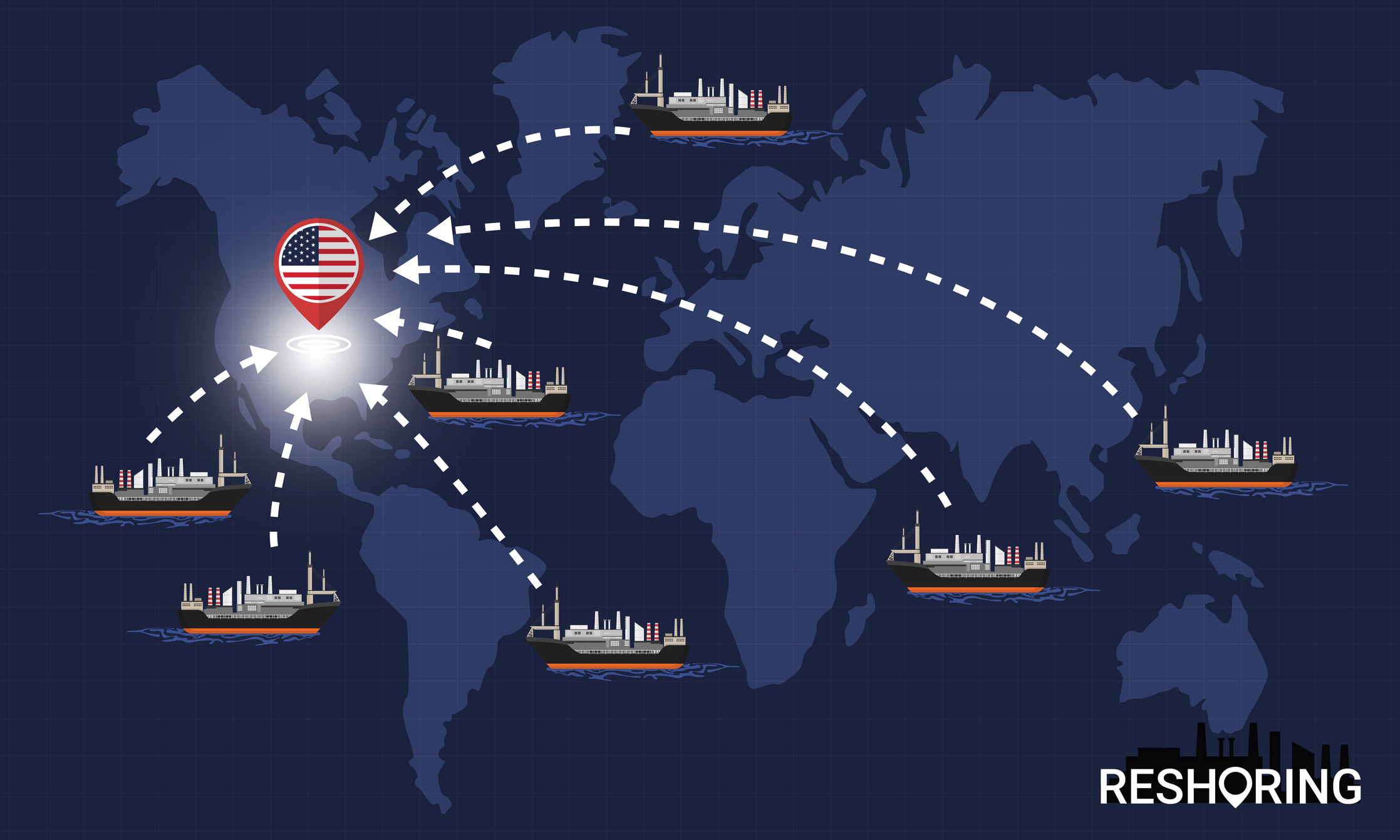
For decades, many companies have built supply chains that stretched across continents in pursuit of lower costs. In recent years, shipping delays, tariffs, and geopolitical uncertainty have exposed some of the risks of that approach, and a growing number of manufacturers may be reconsidering where and how they produce goods. In this blog, learn more about reshoring, what may be driving it, and where investors could see potential venture opportunities.
What Is Reshoring?
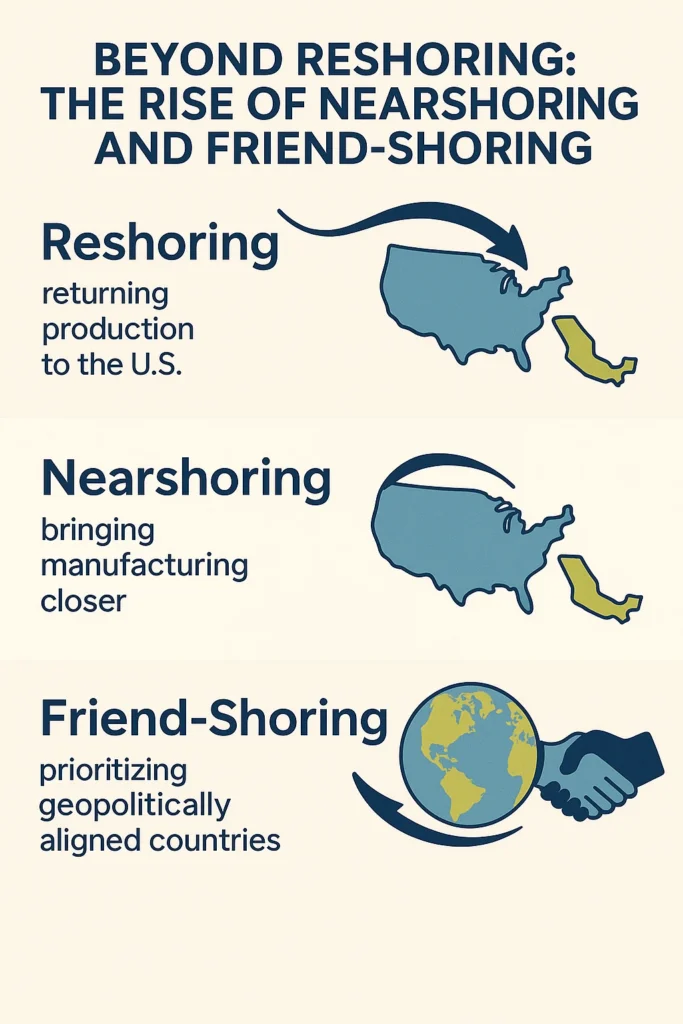
The offshoring trend of the late twentieth century was largely driven by the pursuit of lower labor and production costs. Many companies optimized their supply chains for efficiency, often relying on a small number of overseas suppliers. Reshoring can reflect a shift in priorities, with some companies placing greater weight on resilience, speed, and control, even if that may come with higher costs in some cases.
What May Be Driving the Shift
Supply chain disruptions in recent years highlighted how dependency on single sources of critical components can have negative impacts. When a factory closure or port backlog in one region could halt production elsewhere, many companies may have begun to view geographic concentration as a meaningful business risk rather than a simple cost savings.
Policy has also played a role, though it has shifted frequently. Tariffs can raise the cost of overseas production, but the rules governing them have changed several times. In February 2026, the Supreme Court ruled that tariffs imposed under the International Emergency Economic Powers Act were invalid, while tariffs under Section 232 and Section 301 remained in place.[i] Separately, the CHIPS and Science Act appropriated $39 billion through fiscal year 2026 for an incentives program intended to encourage domestic semiconductor manufacturing.[ii]
Economic factors could be contributing as well. According to the Reshoring Initiative, manufacturers have been accelerating investments in automation as labor shortages persist, which may help narrow the cost gap between producing goods abroad and producing them domestically. However, the same report notes that workforce availability remains a key constraint on how much reshoring can happen.[iii]
What the Data Shows So Far
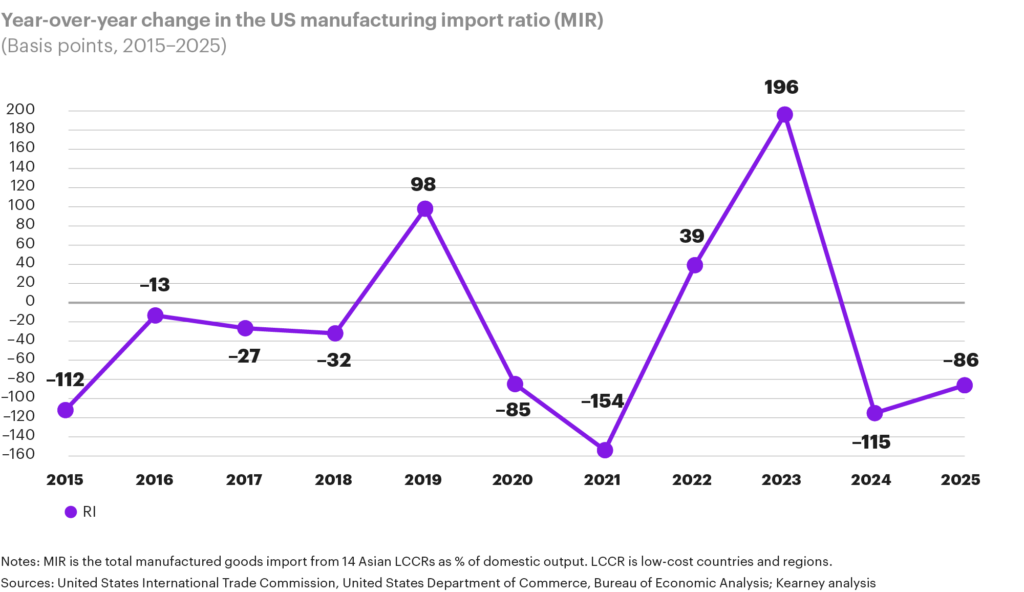
It’s important for investors to recognize that the data on reshoring can be mixed. The Reshoring Initiative reported approximately 247,000 manufacturing jobs announced in 2025 through reshoring and foreign direct investment, roughly in line with 2024.[iv] At the same time, Kearney’s Reshoring Index remained in negative territory in 2025, as imports from 14 Asian countries rose as a share of U.S. domestic manufacturing output. Kearney found that many companies are favoring reversible moves rather than irreversible investments, suggesting that some activity may reflect a reconfiguration of global supply chains rather than a full return of production.[v]
Where Venture Opportunities Could Emerge
As companies work to build or rebuild domestic production capacity, they may need new tools, technologies, and services. Several categories could be positioned to benefit.
Industrial Automation and Robotics
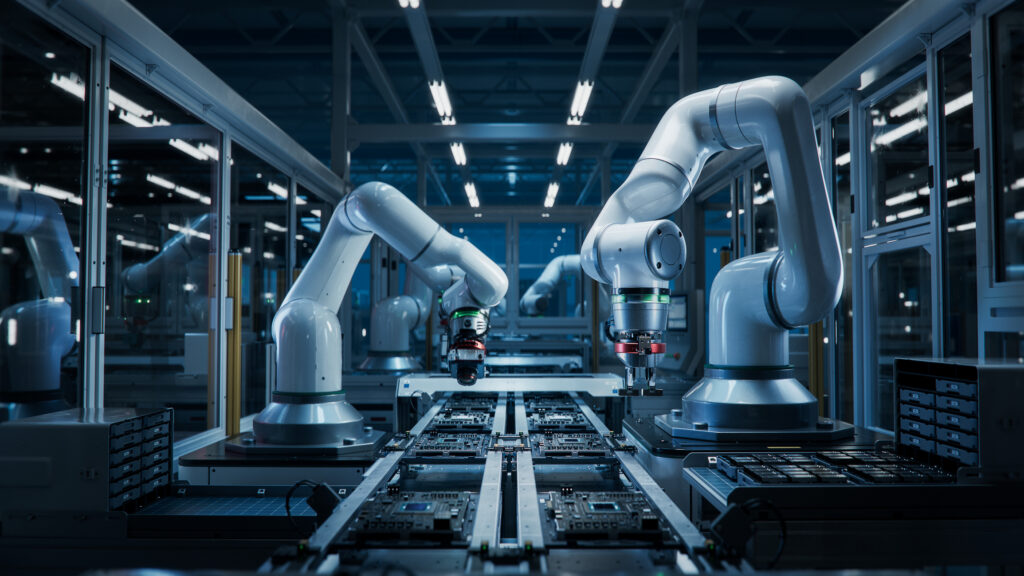
Higher domestic labor costs can make automation an important part of the reshoring equation. Startups developing robotics, machine vision, and intelligent factory systems may help manufacturers produce goods competitively without relying solely on additional labor. Some of these companies offer robotics on a subscription basis, which could lower the upfront cost for smaller manufacturers.
Supply Chain Software and Visibility
Many companies may not have a complete picture of their suppliers beyond the first tier. Software platforms that map supplier networks, monitor risk in real time, and support procurement decisions could become more valuable as companies restructure their sourcing. These businesses are typically less capital intensive than hardware-focused startups, which may appeal to some investors.

Advanced Manufacturing
Technologies such as additive manufacturing, commonly known as 3D printing, along with modular or flexible factory designs, could allow companies to produce smaller batches closer to their customers. Contract manufacturing networks that connect product companies with available domestic capacity may also play a role in helping businesses reshore without building their own facilities.

Logistics and Warehousing Technology
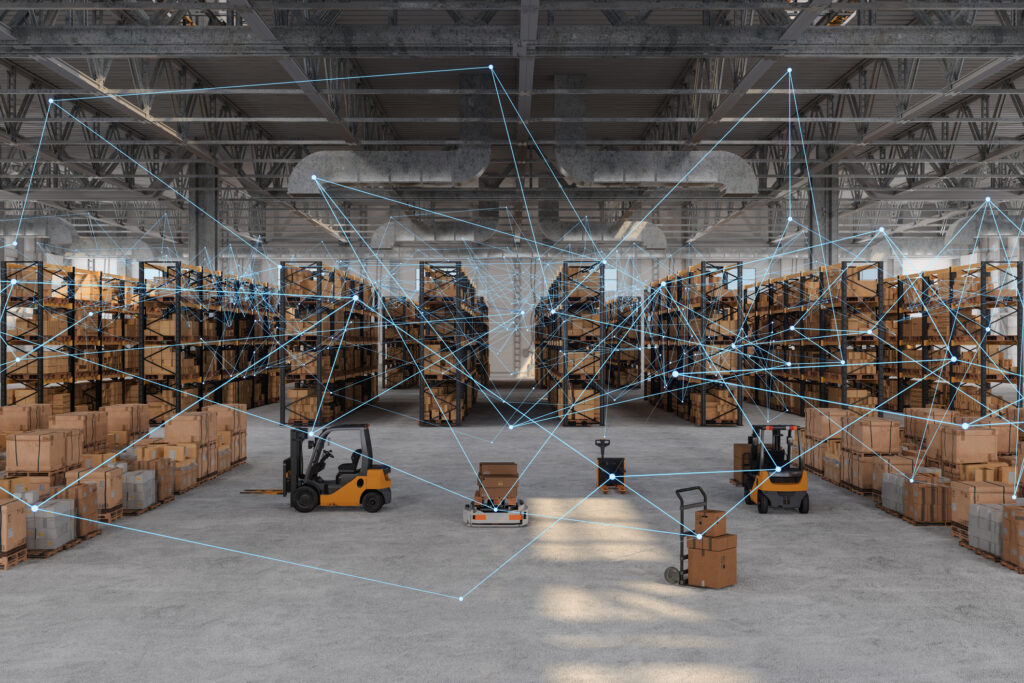
Shorter supply chains can change how goods move and where they are stored. Startups focused on regional distribution, inventory forecasting, and warehouse automation may see demand as companies adjust their logistics networks to support domestic production.
Considerations for Investors
Many reshoring-related startups, particularly those in hardware and manufacturing, can require significant capital to build products and scale operations. Investors may want to look closely at a startup’s use of funds to assess whether capital is being allocated toward meaningful milestones.
Policy risk is another factor investors should carefully consider. Incentives, tariffs, and trade agreements can change with new administrations, court decisions, or shifting economic conditions. For example, the temporary tariff put in place after the Supreme Court ruling expired in July 2026 and was replaced by new tariffs under a different legal authority.[vi] Some incentives also carry deadlines, as the CHIPS Act’s 35% investment tax credit is available only to projects that begin fab construction before December 31, 2026.[vii] A startup whose business model depends heavily on a specific policy could face challenges if that policy is altered, allowed to expire, or repealed.
Timelines may also differ from those of software-focused companies. Manufacturing and industrial startups can take longer to reach revenue and scale, which may be especially relevant for investors evaluating early-stage startups in this space. Because many of these companies make claims about complex hardware or automation technology, technical due diligence could be an important part of the due diligence process.
Final Thoughts
Reshoring reflects a potential shift in how some companies weigh cost against resilience, driven by supply chain disruptions, policy changes, and evolving economics. This shift could create opportunities for startups in automation, supply chain software, advanced manufacturing, and logistics. As with any emerging trend, investors may want to weigh these opportunities against considerations such as capital intensity, policy risk, and longer timelines.
Ready to invest in startups? Sign up for a MicroVentures account to start investing.
Want to learn more about investing in startups? Check out the following MicroVentures blogs to learn more:
- From Factories to Frontiers: The Future of Robotics and Automation
- Beyond Sci-Fi: The Rise of Deep Tech
- Hardware vs. Software Startups: Key Differences Investors Should Understand
Sources
- [i]bakermckenzie.com — https://www.bakermckenzie.com/en/insight/publications/resources/us-trade-enforcement-strategy
- [ii]congress.gov — https://www.congress.gov/crs-product/R49031
- [iii]tradeandindustrydev.com — https://www.tradeandindustrydev.com/industry/all-industries/next-wave-reshoring-36383
- [iv]tradeandindustrydev.com — https://www.tradeandindustrydev.com/industry/all-industries/next-wave-reshoring-36383
- [v]kearney.com — https://www.kearney.com/service/operations-performance/us-reshoring-index
- [vi]sec.gov — https://www.sec.gov/Archives/edgar/data/1872525/000121390026087791/ea0301159-10q_stran.htm
- [vii]congress.gov — https://www.congress.gov/crs-product/R49031
Important disclosure
The information presented here is for general informational purposes only and is not intended to be, nor should it be construed or used as, comprehensive offering documentation for any security, investment, tax or legal advice, a recommendation, or an offer to sell, or a solicitation of an offer to buy, an interest, directly or indirectly, in any company. Investing in both early-stage and later-stage companies carries a high degree of risk. A loss of an investor’s entire investment is possible, and no profit may be realized. Investors should be aware that these types of investments are illiquid and should anticipate holding until an exit occurs.