Vertical SaaS: Why Niche Software Can Build Deep Moats
Software built for a single industry, such as restaurants or construction, may appear to target a limited market at first glance. Yet some of these companies can become deeply embedded in the daily operations of their customers, which may make them difficult to replace. In this blog, learn more about vertical software as a service (SaaS), where its competitive advantages can come from, and what investors may want to consider when evaluating these companies.
What Is Vertical SaaS?
SaaS generally refers to software that customers access over the internet on a subscription basis, rather than purchasing and installing it outright. Many widely used SaaS products are horizontal, meaning they are designed to serve businesses across many industries, such as customer relationship management (CRM) or accounting tools.
Vertical SaaS takes a different approach. These companies typically build software for a single industry, such as restaurants, construction, dental practices, property management, or life sciences. Their products are generally designed around the specific workflows, terminology, and regulations of one sector.
This focus can matter because many industries have processes that general-purpose software may not handle well. A construction firm managing subcontractors and change orders may have very different needs than a veterinary clinic scheduling appointments and tracking patient records, for example. Purpose-built tools may be able to address these needs more directly.
Where Vertical SaaS Moats Can Come From
When analyzing an investment, a moat generally refers to a durable competitive advantage that may help a company protect its market position. Vertical SaaS companies may be able to build moats in several ways.
Workflow Depth and Switching Costs
When vertical software becomes a customer’s system of record for scheduling, billing, inventory, and reporting, it can become central to how the business operates. Moving to a different provider may require migrating years of data, retraining staff, and disrupting daily operations. These switching costs could make customers less likely to leave.
Industry-Specific Data
Over time, a vertical SaaS company may accumulate data about pricing, operations, and customer behavior within its industry. In some cases, this data can be used to improve the product, offer benchmarking, or develop new features. Newer competitors may find this difficult to replicate.
Embedded Payments and Financial Services
Many vertical SaaS companies have expanded beyond software subscriptions into payments, lending, payroll, or insurance. Because the software already sits at the center of a customer’s operations, these add-on services may be easier to offer and adopt. This can help increase revenue per customer and could further deepen the customer relationship.
Compliance and Regulatory Features
In heavily regulated industries such as healthcare or life sciences, software that helps customers meet reporting and recordkeeping requirements may be cautious. Customers may be reluctant to switch to a provider with an unproven compliance track record.
Industry Network Effects
Some vertical platforms connect multiple participants within an industry, such as buyers, suppliers, and service providers. In these cases, the platform may become more valuable to each participant as more of the industry joins, which could make it harder for competitors to gain traction.
Examples of Vertical SaaS Companies
Toast: Restaurants
Toast offers restaurants point of sale, online ordering, payroll, payment processing, and lending in one platform, and reported approximately 180,000 locations as of the second quarter of 2026. Payments made up about $1.57 billion of its $1.91 billion in revenue that quarter, an example of how embedded financial services can become a large part of a vertical SaaS business. Because Toast runs so much of a restaurant’s daily operations, switching providers could be disruptive, and its restaurant-specific benchmarking data may be hard for a general-purpose competitor to replicate. [i][ii]

Yardi: Real Estate
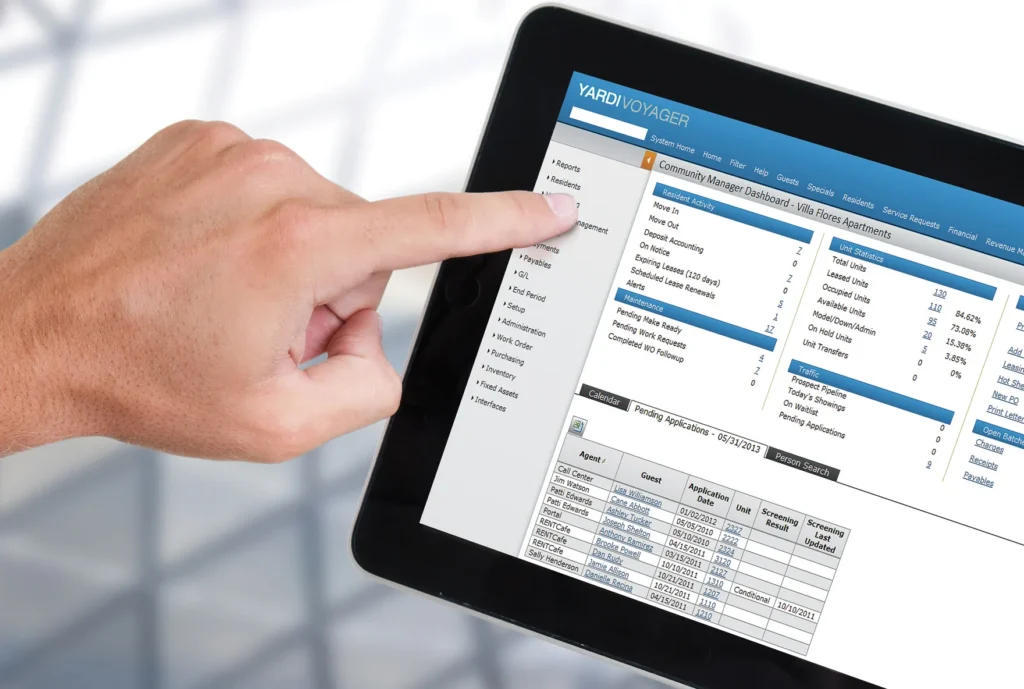
Yardi provides property management software used across multifamily, commercial, affordable housing, and other property types. [iii] Its Voyager platform can serve as a property manager’s system of record for leases, accounting, and tenant data, which may make it difficult to replace.[iv] Yardi also offers rent payments, renters insurance, and Yardi Matrix, a data business covering property-level rents, occupancy, and ownership.[v] That depth within real estate may be difficult for a horizontal software provider to match.
Potential Limitations
Vertical SaaS is not without potential limitations. Because these companies focus on one industry, their total addressable market (TAM) may be smaller than that of a horizontal competitor. For an early-stage startup, that TAM ceiling is often distant enough to not matter as much. But once a company has captured a significant share of its core market and is settling into the stage of being a late-stage startup, a smaller TAM can become a more immediate constraint. Further growth for these later-stage companies may depend on raising prices, selling additional products, or entering new verticals.
Concentration in a single industry could also expose a company to that sector’s economic cycles. A slowdown in construction activity or restaurant openings, for example, may affect customer growth and retention at the same time.
Expanding into adjacent industries may also be more difficult than it appears, since workflows that seem similar from the outside can differ meaningfully in practice. In addition, horizontal platforms or newer artificial intelligence (AI) native entrants could compete by adding industry-specific features, which may narrow the advantages that vertical players rely on.
What Investors May Want to Consider
As part of the due diligence process, investors may want to look at retention metrics. Net revenue retention (NRR), which generally measures how revenue from existing customers changes over time, can serve as one indicator of how embedded a product is. Low customer churn could also suggest that switching costs are meaningful.
Investors may also want to consider how much of the core market a company has already penetrated and how much room may remain. Go-to-market efficiency can be another area to examine. Because vertical SaaS companies sell into a defined industry, they may be able to reach customers through trade associations, industry events, and referrals, which could support a lower customer acquisition cost in some cases.
Finally, investors may want to understand how revenue is split between software subscriptions and payments or financial services, since these streams can carry different margins and risks. For investors less familiar with software, technical due diligence may also help assess how deeply a product is integrated into customer workflows.
Final Thoughts
Vertical SaaS companies focus on serving a single industry, which may limit their market size but can also allow them to become deeply embedded in their customers’ operations. Switching costs, industry data, embedded financial services, compliance features, and network effects are among the ways these companies may build durable advantages. Investors may want to weigh these potential moats against limitations such as market size and industry concentration when evaluating an opportunity.
Are you ready to invest in startups? Sign up for a MicroVentures account to start investing!
Want to learn more about investing in startups? Check out the following MicroVentures blogs to learn more:
- The Growth of Supply Chain and Logistics Tech
- Navigating Startup Exits
- Why Churn Matters More Than New Customers in SaaS
- The Hidden Risk in Usage-Based Pricing Models
- How to Evaluate a Startup’s Competitive Moat
Sources
- [i]nasdaq.com — https://www.nasdaq.com/press-release/toast-announces-second-quarter-2026-financial-results-2026-08-04
- [ii]s28.q4cdn.com — https://s28.q4cdn.com/141746709/files/doc_financials/2025/ar/Toast-Inc-10K-2026-V1-FINAL.pdf
- [iii]yardi.com — https://www.yardi.com/company/about-us/
- [iv]yardi.com — https://www.yardi.com/product/payment-processing-residential/
- [v]yardi.com — https://www.yardi.com/product/matrix/
Important disclosure
The information presented here is for general informational purposes only and is not intended to be, nor should it be construed or used as, comprehensive offering documentation for any security, investment, tax or legal advice, a recommendation, or an offer to sell, or a solicitation of an offer to buy, an interest, directly or indirectly, in any company. Investing in both early-stage and later-stage companies carries a high degree of risk. A loss of an investor’s entire investment is possible, and no profit may be realized. Investors should be aware that these types of investments are illiquid and should anticipate holding until an exit occurs.