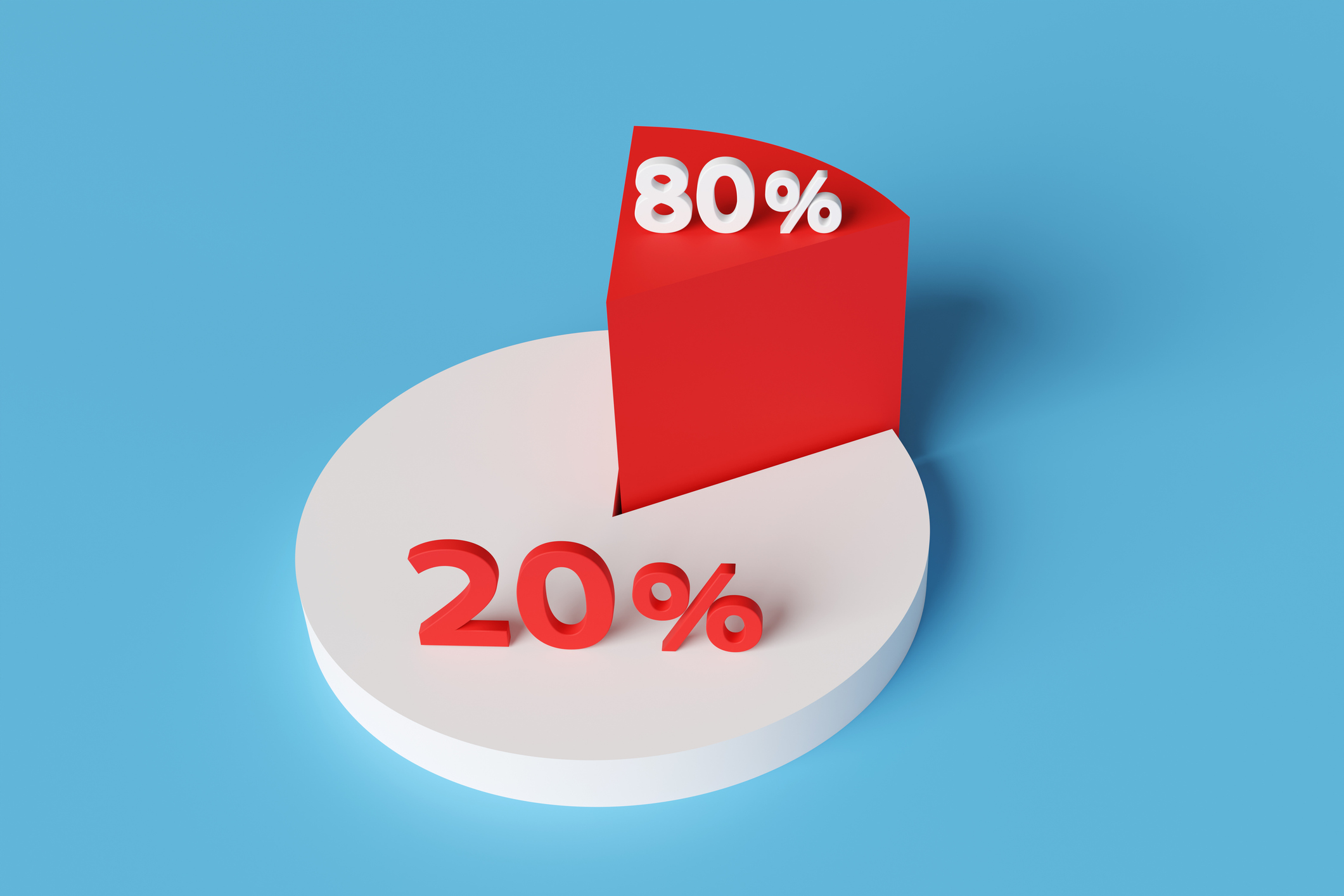
For investors, assessing how a startup’s revenue is distributed across its customer base is a critical part of due diligence. This blog explores how to identify concentration risk, evaluate how exposed a business is to the loss of a single customer, and consider the factors that may influence long-term revenue stability. A natural starting point is understanding how dependent a company is on its top one or two accounts, and what that dependency could mean if those relationships change.
What Is Revenue Concentration Risk?
Revenue concentration risk refers to the degree to which a startup’s income is dependent on a small number of customers. When a disproportionate share of revenue flows from a single account, that customer holds significant leverage over the business, whether or not either party fully recognizes it. During the due diligence process, investors may want to assess whether a startup’s revenue base is sufficiently diversified, or whether it is structurally vulnerable to a single relationship deteriorating.
The 20% Rule of Thumb
A commonly referenced threshold in investor due diligence is whether any single customer accounts for more than 20% of a company’s total revenue. Above that level, questions tend to follow. Above 30 or 40%, concentration becomes a more significant concern, one that can affect valuation, deal structure, and in some cases, investment decisions altogether. The threshold is not absolute, and context matters, but it provides a useful starting point for evaluating exposure.
Why Concentration Builds
Concentration is rarely a deliberate strategy. It tends to be the residue of early growth, a landmark enterprise deal, a pilot that became a multi-year contract, or a referral that quietly became an anchor account before the sales pipeline had time to catch up. By the time the pattern is visible, it is often already entrenched. The contracts are signed, the customer expects prioritized service, and the sales capacity needed to diversify has been slow to develop.
Pricing and Negotiating Power
When a single customer represents a material share of revenue, the dynamic of the commercial relationship changes. At renewal, that customer may have more leverage to negotiate discounts, demand additional services, or push for terms that erode margins. A startup that can’t afford to lose its largest account is, in practical terms, not negotiating from a position of strength. This dynamic can compound over time, gradually compressing unit economics in ways that are difficult to reverse.
Product Roadmap Capture
A concentrated customer relationship can also influence a startup’s product direction in ways that extend beyond what is strategically sound. When a single account generates the majority of revenue, its feature requests, integrations, and edge cases can begin to shape the product roadmap disproportionately. The result is a product that increasingly serves one customer’s specific needs rather than the broader market, a drift that may make it harder to attract and retain other accounts over time.
The Risk of Sudden Loss
The most acute form of concentration risk is straightforward: the anchor customer leaves. This can happen for reasons entirely outside a startup’s control, an acquisition, a budget cut, a change in leadership, or a strategic pivot. When a single account represents 30% or more of a company’s revenue, its departure can create an immediate liquidity and operational crisis, one that may be difficult to recover from without significant runway or a rapid sales response.
Key Considerations
Not every startup with a concentrated customer base is in a precarious position, and concentration at an early stage is not necessarily a red flag on its own. Many companies land large accounts early and use that traction to build credibility and fund the sales motion needed to diversify. What matters more is whether the founding team has a clear-eyed view of the risk and a credible plan to address it over time.
For investors, it can be important to assess whether the company is actively working to reduce concentration, or whether leadership has rationalized the dependency as a strength. A founder who cannot articulate how the revenue base will become more distributed over the next 12 to 24 months, or who does not appear to view concentration as a meaningful risk, may warrant additional scrutiny during the diligence process.
Final Thoughts
Evaluating revenue concentration risk is an important part of the due diligence process. A startup with heavy customer concentration may still represent a compelling investment, but the risks involved deserve a clear-eyed assessment. As with any aspect of due diligence, investors may want to pressure test a founder’s claims about pipeline health and customer diversification against reliable data before making an investment decision.
Are you ready to invest in startups? Sign up for a MicroVentures account to start investing!
Want to learn more about investing in startups? Check out the following MicroVentures blogs to learn more:
- Going Public: Direct Listing vs IPO vs SPAC
- Understanding Voting vs Non-Voting Shares
- Developing Your Investment Thesis
- Learning From Failed Startups
Important disclosure
The information presented here is for general informational purposes only and is not intended to be, nor should it be construed or used as, comprehensive offering documentation for any security, investment, tax or legal advice, a recommendation, or an offer to sell, or a solicitation of an offer to buy, an interest, directly or indirectly, in any company. Investing in both early-stage and later-stage companies carries a high degree of risk. A loss of an investor’s entire investment is possible, and no profit may be realized. Investors should be aware that these types of investments are illiquid and should anticipate holding until an exit occurs.